
Multilingual CMS: content, translations and approvals
Back
A multilingual CMS has to do more than store translations. It needs a reusable content model, clean locale URLs, clear approvals and a structure that makes sense to both search engines and humans. If you decide those basics early, you avoid duplicate work, unclear ownership and broken language logic later on.
Google’s helpful, reliable, people-first content guidance points in the same direction: content should serve people first. For multilingual sites, that means clarity beats complexity.
What a multilingual CMS really has to do
A multilingual CMS does not just manage text in two or three languages. It coordinates content, metadata, media, permissions and publishing per locale. That is why the real question is not only “How do we translate?” but “How do we keep the system manageable as it grows?”
Current guides such as the WPVIP article on multilingual CMSs describe the same core idea: translation workflows, localization, SEO, governance and content delivery belong together. Once those pieces are split apart, multilingual publishing turns into a patchwork.
• Shared content should stay central so every language does not become its own copy of the same core.
• Locale-specific fields usually include titles, slugs, metadata, CTA copy and market-specific notes.
• Media may need variants, but not every page needs separate assets.
• A clear workflow matters more than a bigger tool stack.
Shared content core vs locale-specific fields
The most common architecture mistake is easy to spot: everything gets duplicated per language. That feels simple at the start, but it quickly creates inconsistency. A better model keeps one shared core and localizes only what truly needs to change. Content, structure, reuse and governance then remain separate from language.
If a section is identical in every market, it should be maintained identically. Only where language, regulation or search intent actually differs should the content branch. That keeps the CMS lean and prevents editors from chasing the same change across three versions.
• The shared core usually covers value, service description, references and standard modules.
• Local fields usually cover slug, meta title, meta description, CTA copy and market-specific notes.
• A good model makes differences visible instead of hiding them inside copied pages.
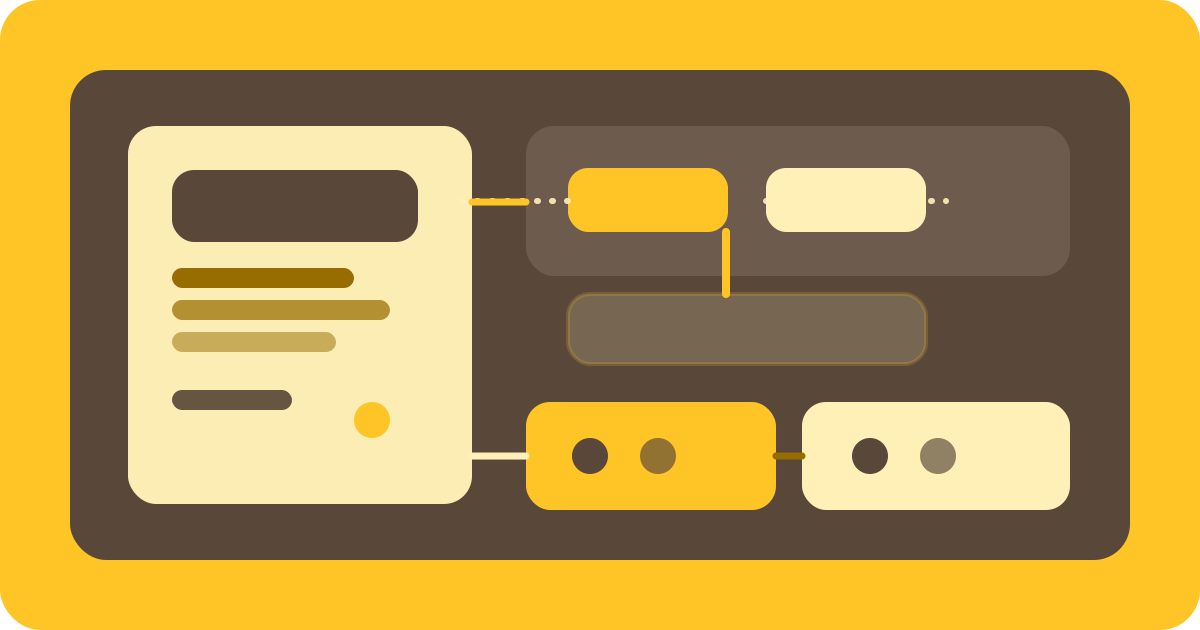
Shared content stays central, while locale fields branch only where translation requires them.
URLs, discoverability and SEO
For search engines and users, the URL is an orientation signal. When each language has a clear address, people know where they are and search engines can map versions correctly. In practice that means: do not translate blindly; define a consistent URL strategy.
That affects slugs, path structure and the default language. A stable setup with clear language segments is often better than unstable subdomains or automatically rewritten paths. If you publish internationally, you should also plan how language and page ownership are mapped technically instead of leaving that to chance.
Search intent matters too. A German reader often expects different terms, different proof points and different examples from an English reader. A good multilingual CMS therefore does not only translate; it localizes.

Clean locale URLs help search engines and users find the right language version reliably.
Translation workflow and approvals
A strong CMS rarely fails because of translation itself. It fails at handoffs. Who translates? Who reviews? Who approves? And where can everyone see which locale is currently live? Without those answers, teams get version chaos, duplicate work and unnecessary delays.
The Weglot guide to choosing a multilingual CMS highlights automatic translation, centralized management, multilingual SEO, flexible workflows, granular permissions and language fallback. That list is useful because it shows which building blocks real teams miss once content is pulled out of the system.
• The translator creates the language version.
• The editor checks tone, terminology and market fit.
• An approver decides whether the locale can go live.
• Clear ownership matters more than a clever shortcut.
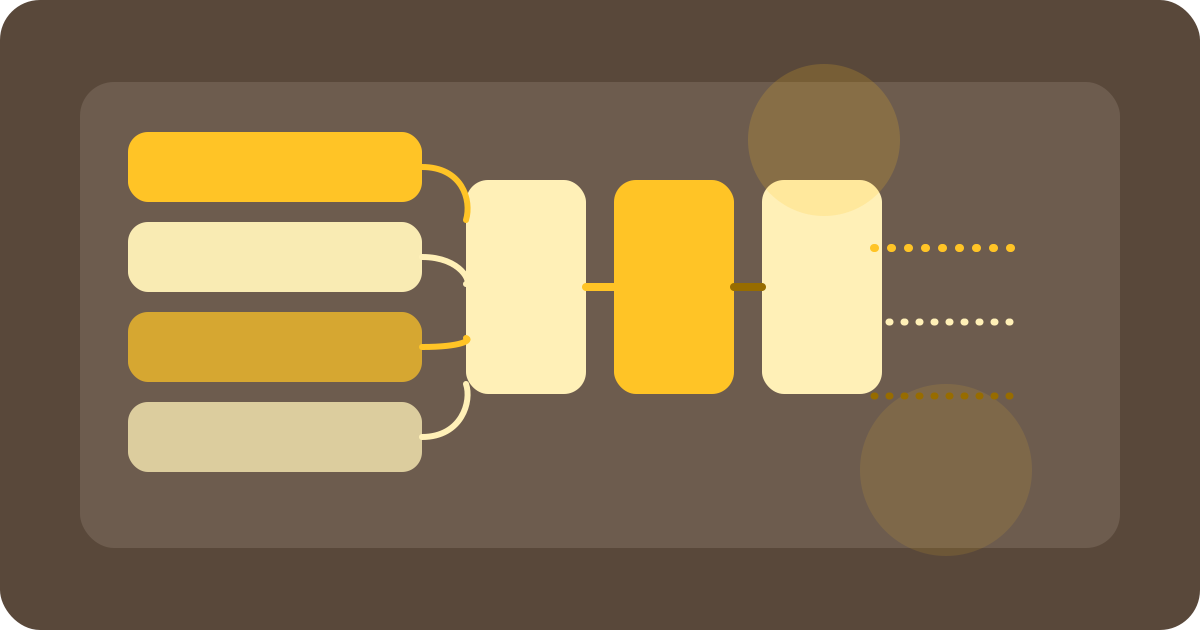
A clear workflow keeps translation and review from splitting into separate tracks.
When a multilingual CMS gets too complex
Not every project needs a heavyweight multilingual architecture from day one. If only a handful of pages are translated, a lighter setup may be the better choice. But once multiple markets, multiple authors, reusable modules and frequent updates arrive, manual handling quickly turns into operational chaos.
Typical warning signs are duplicates instead of shared content, conflicting metadata, unclear slug logic, media without localization and approvals that happen in email or chat. Once those symptoms appear, the architecture question is overdue.
• If content is reused often, the model needs reuse.
• If multiple teams work at once, the process needs visibility.
• If discoverability matters, the site needs clean locale URLs.
• If compliance matters, the CMS needs roles and approvals.
A practical rollout check
Before a multilingual CMS goes live, teams should check five things: Is the shared core modeled cleanly? Are locale-specific fields localized only where needed? Does every market have its own URL? Is the approval flow traceable? And can the team maintain the content without workarounds?
If the answer to any of those questions is not clear, the architecture is not finished yet. That is where strategy and implementation create the most value, because structural mistakes become expensive after launch.
If you want to rebuild your multilingual CMS, your content architecture or your editorial workflows, sophne can connect architecture, content modeling and implementation. The goal is not more content; it is clearer content.
FAQ