
Landing page structure for service pages: a clear blueprint
Back
A good landing page structure for service pages organizes content so people get orientation first and persuasion second. If visitors can immediately see what is offered, who it is for, how the process works and why the team is credible, they can take the next step faster.
Google’s helpful, reliable, people-first content guidance pushes the same direction. And a current guide on landing page structure follows the same sequence: promise, proof and action.
What a service page has to do
A service page is not a brochure. It has to answer three questions in one pass: Is this for me? How does it work? Why should I trust this team?
That means the opening should not waste space on vague slogans. A clear value statement, one proof signal and one visible CTA are often enough to create the first sense of direction.
• The promise must be obvious in the hero.
• The value needs proof, not just adjectives.
• The path to inquiry should remain visible.
• Deep detail belongs where it actually helps.
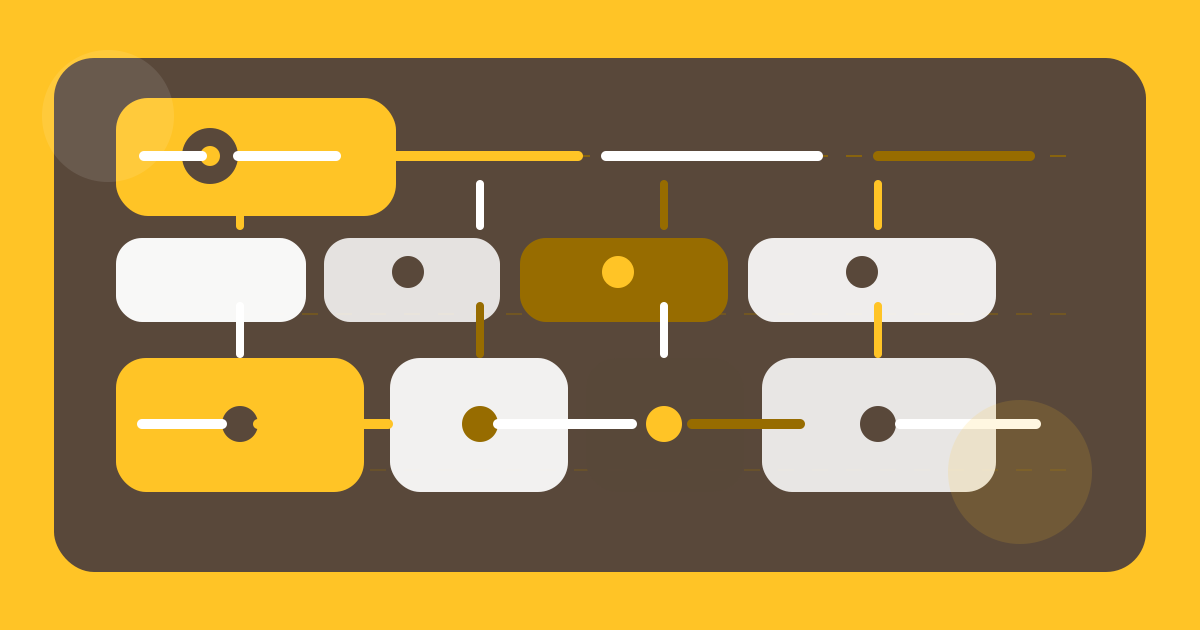
Strong service pages guide visitors through proof, detail and action in a predictable order.
A structure that works
A strong page usually follows a simple sequence: hero, problem, solution, proof, process and close. That sequence is not creative for the sake of creativity. It reduces friction because it answers questions before they turn into objections.
In the hero, show only what helps immediately: the main statement, a supporting subhead and the first clear CTA. Then add context and the problem. Only after that should you explain the offer.
The proof section can use case snippets, metrics, process visuals, quote fragments or a compact FAQ. The format matters less than the credible reduction of risk.
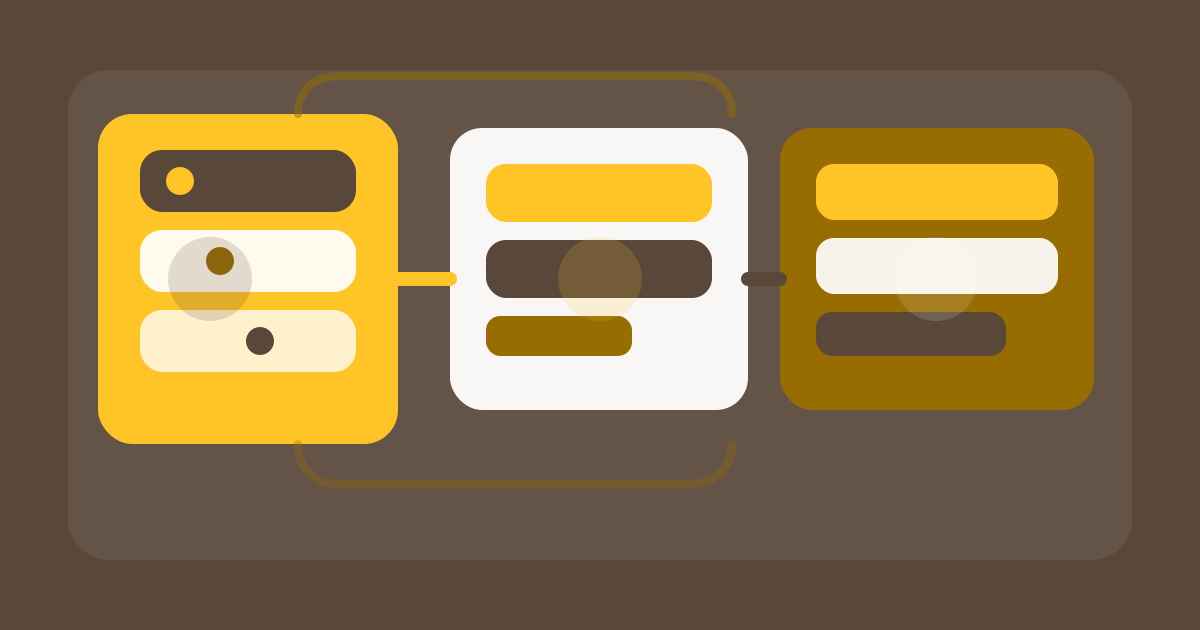
A reusable block system keeps the page model flexible without making the page structure fuzzy.
Content architecture: what stays on the page and what moves out
The real SEO work sits in editorial selection. Not every piece of information belongs on the service page. Deep specs, long technical background, pricing detail and edge cases can often move to a support page, FAQ or case-study block.
Keep the page focused on the elements that help someone decide: the offer, the benefit, the process, the risk, the proof and the next step. Everything else can support the decision, but it should not scatter attention.
• Keep on the page: offer, benefit, proof, process, risk, contact.
• Move out: technical detail, long references, press material, edge cases.
• Every moved-out point needs a clean internal link.
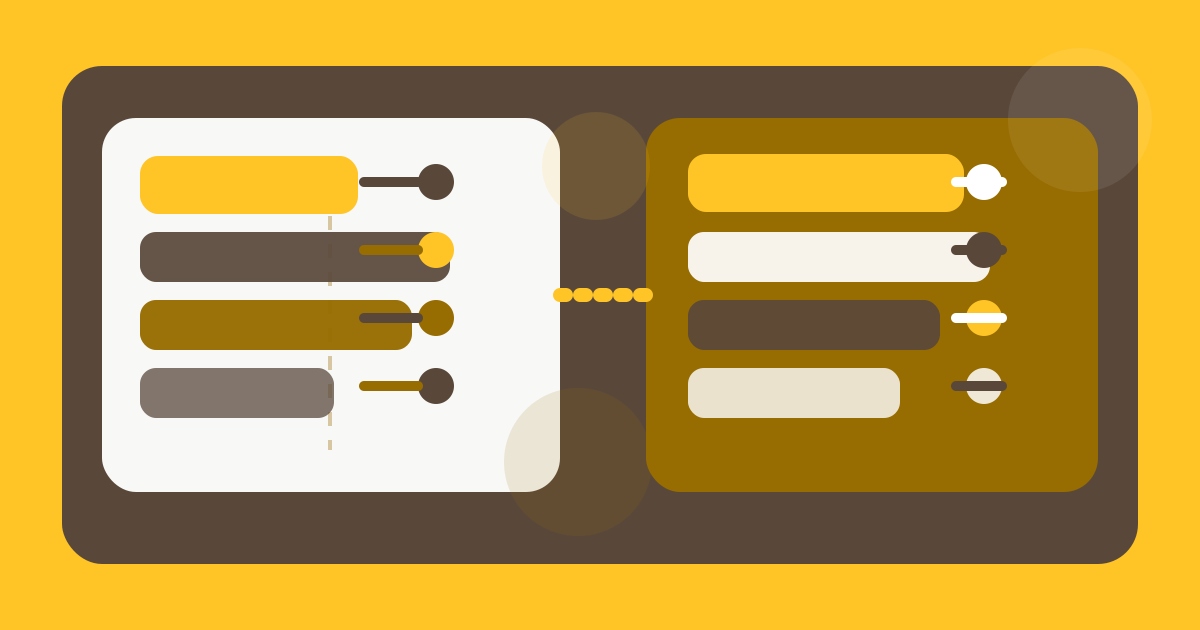
Keep the page focused by moving deep reference material into supporting pages or FAQs.
How to keep the page convertible
The page does not need to do everything. It needs to make the next sensible step possible. In practice, that usually means one clear CTA near the top, one repeated CTA after the proof section, and a closing block at the end.
If you want contact, make the barrier low. If you want a briefing, explain the question you need answered first. That keeps the page both searchable and action-oriented.
Quick pre-launch check
• Does the opening say clearly what the service is?
• Is the key benefit visible before the first scroll?
• Is there enough proof without overloading the page?
• Are title, description, H1 and CTA aligned?
• Does every section lead to a sensible next step?
If you want to restructure a consulting, development or design landing page, sophne can connect architecture, CMS setup and delivery. The goal is not more content; it is clearer content.
FAQ